Saturday, October 13, 2012

Creating Poetry


2 Open Studio artists make digital art worth seeing
Originally published October 12, 2012 in the Santa Cruz Sentinel

When I was a journalism student at Fresno State, professor Flynn—a quirky, straight-talking veteran of both the navy and the Miami Herald—started his reporting class by drawing a list on the blackboard. Flynn’s “Hierarchy of Writers” placed poets at the very top. They were the loftiest, most respected of all writers. Below poets were novelists, playwrights, essayists, advertisers, publicists, etc., and at the very bottom were reporters, the lowliest of all writers, commonly associated with the word “hack” if they did it for too long. I did well in the class, but Flynn’s “Hierarchy” certainly put that into perspective.

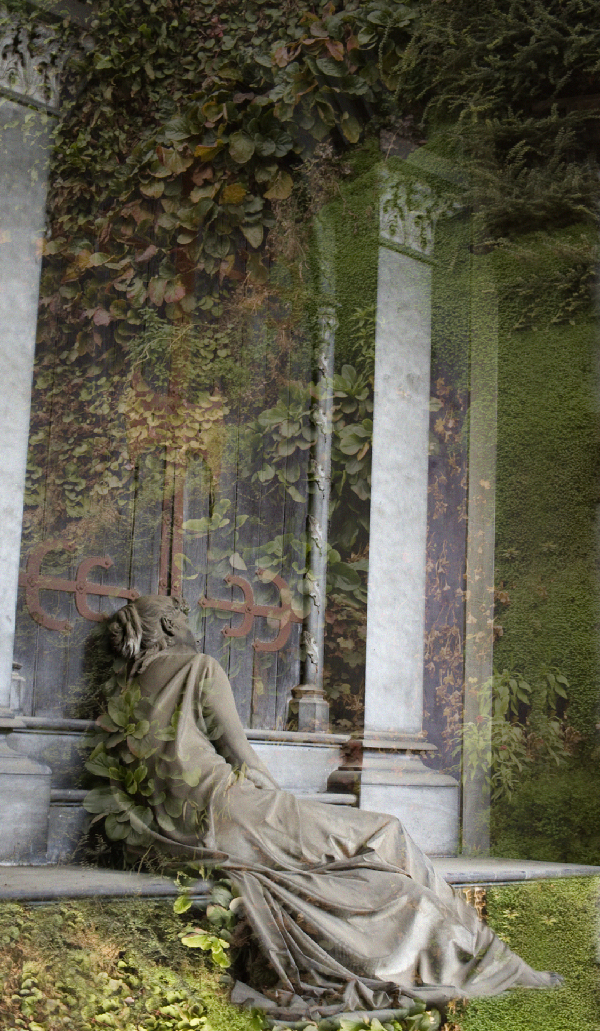
"Celeste" by Bonita Diemoz
As a photographer, I have sometimes sensed a similar unspoken ranking for visual artists. At the very top level are, or course, painters—presumably what all artists would aspire to be if only they had the talent. Below painters in significance are sculptors, architects, printmakers, designers and all sorts of crafts-persons. Photographers are nowhere near the top, and, like journalists, probably somewhere near the bottom—or maybe even in a category all their own, separate from art. Why else would photography be excluded from juried art shows, or share the home arts building with the county fair apple pies and postcard collections?  (To be fair, I hope this has more to do with the popularity of photography and the volume of entries, rather than a snub at photography.)

"Rhoda" by Bonita Diemoz
As you might expect (and I love to demonstrate), I don’t know much about poetic writing. But I would refute a hierarchical view of artists. The most talented among us don’t automatically become painters and the rest of us take what’s left over. Being an artist is all about finding your voice, and the best way to express yourself may not necessarily be through dabs of color on canvas.

Those led to photography can be just as brilliant and talented as any other artist. And these days, digital processes have given photographers many more ways of expressing themselves. In the Open Studios Art Tour calendar for 2012 you’ll find 38 photographers and 13 digital artists. Some digital artists further subcategorize their media as collage or mixed media, and print on surfaces as varied as paper, metal, glass and fabric.
Bonita Diemoz’s surreal digitally altered
 photographs are a treat to see, as well
 as her beautiful Victorian home in
 downtown Santa Cruz.  

"Magdalena" by Bonita Diemoz
Bonita Diemoz, who creates digitally altered photographs, will be participating in her seventh Open Studios Art Tour this year. A former weaver and casual photographer, she took a digital photography class at Cabrillo College from Ted Orland about 10 years ago just to learn how to use her new digital camera. But when she also learned how to use Photoshop, she was hooked. “Once I discovered what I could do in Photoshop, I found my niche.” she says. “I love it. I spend hours and hours and hours even though I work fulltime. If I ever get to retire I’m going to do Photoshop all day long every day.”

Diemoz describes herself as the “Cemetery Queen.” Her favorite cemeteries are in Italy and France, where larger-than-life marble statues adorn the graves of the wealthy. On her website, she shares maps to guide others to Staglieno Cemetery in Genoa or Montparnasse Cemetery in Paris. “From about the 1880s to about the 1920s there was a real renaissance of people hiring famous sculptors to make their one-of-a-kind monument,” says Diemoz. “Today, that’s just prohibitively expensive.”

"Metamorphosis" by Bonita Diemoz
"Rosebud" by Bonita Diemoz
Over the years, she has amassed a large collection of statuary imagery from visits to her favorite cemeteries—angels with impressive wings, lovers kissing, a mother feeding a baby, a woman sleeping—and has combined these emotive images with dramatic scenery. Local residents will recognize the cliffs, surf and beaches along West Cliff Drive as backdrop for many of her photos. The results are startlingly beautiful and otherworldly, more surreal and romantic than tragic.

Diemoz says people either like her images or they don’t. “I know I don’t appeal to the masses. I used to work for one man that won’t even look at them.” She says she gets a good cross-section of visitors at Open Studios. “The young women seem to like the angels.”

"Domenica" by Bonita Diemoz
Linda Cordy’s paintings and digital collages are
 displayed in her living room, as she gets ready for
Open Studios, with her dog, Bailey. 
Another digital photographer taking part in Open Studios is Linda Cordy, who says she has been an artist “as far back as I can remember.” She started oil painting when she was five with her grandfather, an inventor who owned his own photo studio. “He was so patient and wonderful. He was like the perfect English grandfather,” she says. A photograph of one his inventions—the “Mobilopter”—is featured prominently in one of Cordy’s digital collages, looking like a cross between a huge, bloated insect and a helicopter, and very steampunk. “It really did fly,” says Cordy, so proud of his dream-fueled ingenuity.

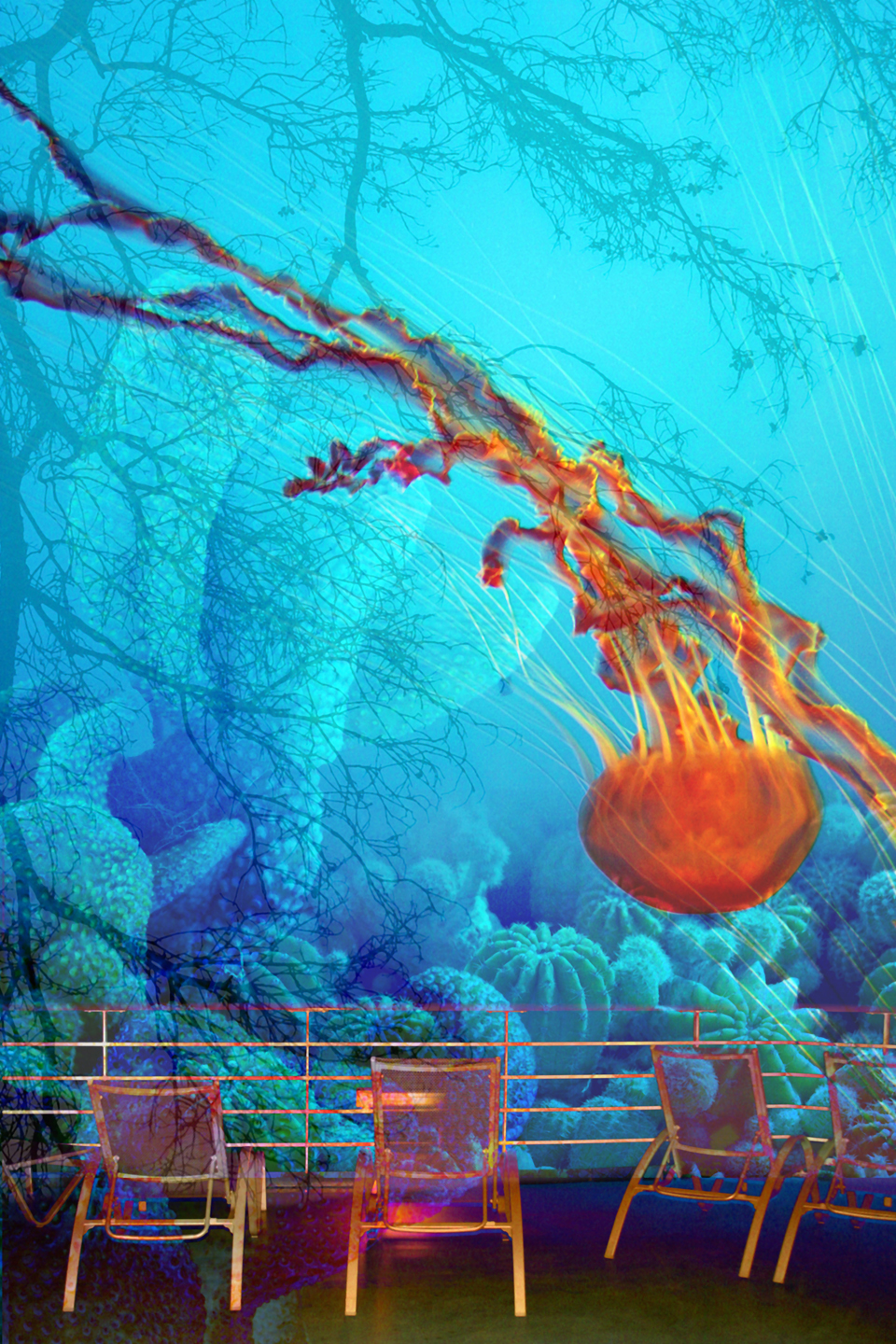
"Jelly" by Linda Cordy
Cordy was also a student of Ted Orland’s at Cabrillo College. Her collages are a fascinating combination of objects and places she’s photographed, and she enjoys pointing out local elements in her work that people will recognize, such as the roof of the Rittenhouse Building or the top of the Boardwalk Merry-Go-Round. In addition to combining layers of her own photographs, she uses digital images of her paintings to create texture and subject matter. She also scans real objects such as flowers and feathers for her collages. “I have to go through thousands of photos. There aren’t many photos you can make collages out of,” says Cordy.

"Wonderland" by Linda Cordy
Much of Cordy’s work is personal or family-related. She has a large portrait she painted of her paternal grandmother on the wall of her living room, with words and phrases floating around her head such as “suffragette,” “union organizer,” and “seamstress to the queen”—so her legacy would be remembered. Cordy has also created a digital family tree collage, with biographical photographs of her relatives. And, above her fireplace is a painting of a seductive scorpion fish—a personal and political statement, she says, about her bank. “They have my loan and they have been evil,” she says with a laugh.

"Velocity" by Linda Cordy
As both a painter and a photographer, Cordy might be the first to tell you that there is no way to rank various artists’ mediums. She says that what appeals to her about painting is the “hands-on process, the more organic connection to the work.” But being a digital artist at the same time, gives her a sense of balance. She spends just a many hours on her digital collages as she might on a painting. But, time spent (or not spent) isn’t really the measure of a successful work of art. “Art has always changed to reflect the current culture,” and new art forms like digital photography “always seem to be under scrutiny,” she says. And photography—as popular as it is—isn’t necessarily the tool of artists who can’t paint. “It is not cheating to take a photo. It’s just another way of seeing.”
"Legend" by Linda Cordy


3 Crafty Weekend Getaways

Drive "over the hill" for a perfect day of food, crafts and adventure
Originally published September 7, 2012 in the Santa Cruz Sentinel

It’s a distinct pleasure to show someone from out of town the treasures of our county. The beach, the weather, the redwoods, lunch at Charlie Hong Kong—what’s not to like? On top of that, our museums, galleries, downtown, and schools are fiercely dedicated to giving us endless opportunities for learning and making. But, there are exciting things happening over the hill too, in some not-so-far-away locations. The still warm days of September and early October might be the perfect time to extend that summer vacation feeling by getting away from home for a perfect weekend combination of good food, exploration and crafting. Here are my suggestions for three destinations and your itinerary for the perfect day:

Family Threads Quilt Shoppe in San Juan Bautista offers classes in sewing, quilting, and fabric
 painting. In fabric painting, taught by quilter Annie Smith, Louise Coombes applies non-caustic
 fabric paints, made permanent by heat-setting with an iron.


Destination:   San Juan Bautista

Driving time:        49 minutes from Santa Cruz
Classes:                Lapidary, beading, stained glass, quilting, sewing
Eats:                      Vertigo Coffee, JJ’s Homemade Burgers
Special events:   Cactus & Succulent Show, Sat. & Sun., Sept. 15-16, 9 a.m. to 5 p.m.,   courtyard of Jardines Restaurant, 115 Third Street, free
Alfred Hitchcock’s Vertigo, Summer Outdoor Movies on the Plaza Lawn, Sat., Sept. 29, sunset (8 – 8:30 p.m.), free, www.sanjuanbautistaca.com

Perfect day trip:
Start the morning with a cup of Old San Juan blend and a pastry at Vertigo Coffee, an artisanal microroastery named after that famous Hitchcock movie filmed at the mission. Walk down to Washington Street, and stroll through the amazing cactus and flower garden in the courtyard behind Jardines Restaurant (on Sept. 15-16, you can also see the Cactus and Succulent Show).  Within a few blocks, learn to use the rentable longarm quilting machine at The Last Stitch in their 2-hour class; or take Lapidary 101 at Tops A Rock Shop; or learn to sew or quilt at Family Threads Quilt Shoppe. A little ways out of town, buy organic local fruits and vegetables at Pinnacle Saturday Farmstand on Duncan Avenue before they close at 1 p.m.

Return to town for a jalapeno burger and garlic fries, with friendly chickens patrolling the outdoor patio at JJ’s Homemade Burgers. Window shop along Third Street, but don’t miss the unexpected finds like barber chairs and pinball machines at Fat Willy’s Antiques on Fourth Street, the most eccentric of San Juan’s numerous antique shops. Head for the Historic State Park Plaza on Second Street, and experience the awe-inspiring dignity, quiet and beauty of San Juan Bautista Mission, dedicated 200 years ago in 1812. Search for paw-printed tiles on the mission floor and the grave marker for Maria Antonio Castro McDougall, the widow of Juan Anzar, who once owned vast land grants in the area. Finish the day with a winding drive through San Juan Canyon to the top of 3,169-foot Fremont Peak. Hike a short distance to the spot where Captain John C. Frémont planted an American flag in 1846 to begin his fight for ownership of the Mexican province of Alta California, and, if it’s clear, to watch an orangey sun dip into the Monterey Bay. (Or see “Vertigo” on the Plaza Lawn at sunset, Sat., Sept. 29.)

Vertigo Coffee, 81 Fourth Street, (831) 623-9533, Sat & Sun 8 a.m. to 5 p.m., www.vertigocoffee.com
Tops a Rock Shop, 209 Third Street, (831) 623-4441, Sat & Sun 10 a.m. to 5 p.m., see www.topsarockshop.com for a calendar of classes
The Last Stitch, 107 B The Alameda, (831) 623-4330, www.laststitchquiltingdesignstudio.com                    
Family Threads Quilt Shoppe, 107 D The Alameda, (831) 623-0200, Sat only 10 a.m. to 4 p.m., see www.familythreads.org for calendar of classes
Pinnacle Saturday Farmstand, 400 Duncan Avenue, (831) 623-9422, Sat only 8 a.m. to 1 p.m., www.pinnacleorganic.com
Fat Willy’s Antiques, 603 Fourth Street, (831) 801-7375, Sat & Sun 10 a.m. to 4 p.m.
Old Mission San Juan Bautista, Second Street, (831) 623-4528, Sat & Sun 9:30 a.m. to 4:30 p.m., www.oldmissionsjb.org
Fremont Peak State Park, end of San Juan Canyon Road, (831) 623-4255, 8 a.m. to sunset , http://www.parks.ca.gov/?page_id=564 (www.fpoa.net for Fremont Peak Observatory info) 

Destination:   San Martin/Morgan Hill

Driving time:        58 minutes from Santa Cruz
Classes:                Gourd crafts
Eats:                      Ladera Grill
Special event:     Calabash Gourd Festival, Sat. and Sun., Oct. 6-7, 9 a.m. to 7 p.m. at the Uesugi Farms Pumpkin Park, $3 parking fee, www.calabashclub.org/festival2012.html

Gourd artist Cyndee Newick will show her
 creative gourd work at the Calabash Gourd
 Festival in San Martin, Oct. 6-7. “Dragon’s Keep”
 is made from a very large, thick kettle hard
 shell gourd, which is wood-burned and
 carved, and then painted with acrylic medium.

(Photo used courtesy of the artist.)  
Perfect day:
Start the day with a warm apple cinnamon bagel and coffee at Daily Bagel Café at Tennant Station in Morgan Hill. Head south on 101 to find the Wings of History Air Museum tucked behind the San Martin Airport, where you can see a full-sized replica of the 1903 Wright Brothers Flyer and other historic planes. Further south, on Fitzgerald Avenue, find locally grown produce at LJB Farms, including the most perfect peaches you’ll ever see from Andy’s Orchard. Drive north on Monterey Road until you see the giant pyramid of pumpkins at Uesugi Farms Pumpkin Park. Stroll through acres of orange, wander through the corn maze, take a hayride or a loop on the Pumpkinville Train, and attend the first ever Calabash Gourd Festival (Oct. 6-7), sponsored by the Calabash Club of Silicon Valley. Get inspiration from the displays of gourd art, then take a half-day gourd craft class to make gourd jewelry, masks, ornaments, or bowls (register in advance on the website). Gourd-craft activities for children, dried gourds and crafting supplies will also be available.

Grab a quick lunch at the festival, or, for more a more elegant dining experience, enjoy tortilla-crusted tilapia or smoked salmon linguini at a sidewalk table at Ladera Grill in downtown Morgan Hill. After lunch, if you call ahead, you can visit the unusual SK Topiary on Santa Teresa Blvd., where you can purchase wire frames (also good for mosaicing) and topiaries of all shapes and sizes, including dolphins, giraffes, cats, dogs and golfers. Then, sip wine on the Grande Terrace overlooking the lovely vineyards at Clos LaChance Winery. Continue south on scenic Watsonville Road for more wine tasting, or stop at Uvas Reservoir to hike over the dam and spillway to a trail overlooking the water where an occasional male tarantula will cross your path in search of a mate. Drive back home through the redwoods on highway 152, stopping at the top of Mt. Madonna for a great view of the Monterey Bay and if you’re lucky, a lovely sunset.


Daily Bagel Café, 614 Tennant Station, Morgan Hill, (408) 779-3933, Sat & Sun 7 a.m. to 2 p.m.
LJB Farms, 585 Fitzgerald Avenue, San Martin, (408) 842-9755, Sat & Sun 9 a.m. to 6 p.m., www.ljbfarms.com  
Wings of History Air Museum, 12777 Murphy Avenue, San Martin, 408-683-2290, Sat & Sun 11 a.m. to 4 p.m., www.wingsofhistory.org
Uesugi Farms Pumpkin Park, 14485 Monterey Road, San Martin, (408) 78-7225, Sat & Sun 9 a.m. to 7 p.m., http://www.uesugifarms.com
Ladera Grill, corner of Monterey Road and Third Street, Morgan Hill, (408) 201-9200, Sat & Sun 11 a.m. to 10 p.m., www.laderagrill.com
SK Topiary, 13235 Santa Teresa Blvd., San Martin, (408) 686-1918, Sat & Sun 9 a.m. to 5 p.m., www.sktopiary.com, call for appointment
Clos LaChance Winery, 1 Hummingbird Lane, San Martin, (800) 487-9463, check calendar for hours of operation of tasting room
 at clos.com
Uvas Reservoir, 14200 Uvas Road, Morgan Hill, 8 a.m. to sunset

The workroom at SFCB offers plenty of space for workshops and a gallery with handmade book-related exhibits. 
(Photo from SFCB website.)


Destination:   Potrero Hill, San Francisco

Driving time:        1 hour 27 minutes from Santa Cruz
Classes:                Bookmaking
Eats:                      Source, A Multi-Dimensional Dining Experience
Special event:     Roadworks, a Steamrolling Printing Festival, Saturday, September   22, noon to 5 p.m. on Rhode Island Street between 16th and 17th Streets, free, sfcb.org     

San Francisco Center of the Book offers over 300
 classes annually in a wide range of topics
 related to bookmaking. 

(Photo from SFCB website.)
The San Francisco Center for the Book is a cobalt blue building in Potrero Hill, just south of the Design District. Their goal is to foster the joys of books and bookmaking, which they do exceeding well through exhibitions, free community events and over 300 workshops annually. Their Roadworks Street Fair, on Sept. 22, is a day-long printmaking showcase, presented along with food and craft vendors as well as a three-ton construction steamroller making large-scale prints using Rhode Island Avenue as the letterpress bed. Take a mini-workshop at SFCB during the festival, so you can get a taste of their more in-depth classes in binding, printing, and all sorts of book-making arts, including calligraphy, image transfers, trace monotype, journals and accordion books.

This is also a good opportunity to wander around the Potrero Hill neighborhood and discover a part of San Francisco you may not know well, with amazing home décor and antique stores, funky eateries like Source, “A Multi-Dimensional Diving Experience” and the California Culinary Academy.

San Francisco Center for the Book, 300 De Haro Street #334  San Francisco, (415) 565-0545, Sat. noon to 4 p.m., sfcb.org for catalog of classes
Source (restaurant), 11 Division Street at Deharo, San Francisco, (415) 864-9000, Sat & Sun 11 a.m. to 10 p.m.

Saturday, August 25, 2012

Point of Departure

Art benefits music, as generous artists support the Santa Cruz County Symphony

Originally published in the Santa Cruz Sentinel, August 10, 2012

Quinlyn Baine, then 11, sits astride “Buffalocorp” by
Nick Hermes in 2004, part of the Spirit of the Buffalo
 OK Centennial Street art project in Oklahoma City.
In the summer of 2004 my family took a Route 66 road trip from California to Chicago. It was a perfectly timed moment, when my daughters were young enough to experience our adventure with excitement and wonder but old enough to understand and remember a lot of what we saw. Highlights in our half-way-there state, Oklahoma, included a moving visit to the Oklahoma City National Memorial, honoring those involved in the tragic 1995 bombing of the Murrah Federal Building; our first and only firefly sighting during a late night picnic table dinner at the Tulsa KOA; and cooling off in a public fountain surrounded by life-sized buffalo art in steamy downtown Oklahoma City.

“Spirit of the Buffalo” was an OK centennial project, which engaged a series of artists to decorate large plastic models of buffalo as sidewalk art. It reminded the four of us of a similar project closer to home, when San Jose saw what artists could do with 100 fiberglass sharks in 2001. Apparently the Baines have little respect for the sanctity of public art, because I have photographs of my girls climbing on both a suit-and-tie buffalo in Oklahoma City and a metallic robo shark in downtown San Jose.

My daughter Casey, 6 years old in 2001, poses on Cubist Robo Shark, one of 100 sharks commissioned by the City of San Jose and the Sharks to celebrate the  San Jose Sharks 10th anniversary and be auctioned off for charity. These dazzling creations were scattered throughout downtown San Jose—which our family sought out treasure-hunt style—and the designs ranged from a Chinese dragon, to a “Do you know the way to San Jose?”, to a ’57 Chevy, to a yellow submarine shark. Cubist Robo Shark was created by artists Sean Boyles, Kelly Detweiler and students at Downtown College Preparatory.

But it is fascinating to see the diverse directions artist will go when given an identical starting point. Toni Sutherland gave local artists a similar opportunity last February when she helped organize the “Wet Art” project. Wetsuits from 36 well-known Santa Cruz surfers were the common material for 36 local artists, including Sutherland herself who designed a lovely gown with an embellished wetsuit bodice and lots of billowy tulle netting for the floor-length skirt. The decorated wetsuits were auctioned to benefit local youth organizations.
Toni Sutherland was recruited to design a chair by her
mother—a League member—who also
 provided the yard-sale school chair.
Sutherland is using tulle again to create a chair for the Symphony League’s “A Rare Chair Affair” –a fundraising auction for the Santa Cruz County Symphony. Like her wetsuit gown, her chair was inspired by her self-professed love of all things sea-related, tulle, and hot glue guns. Sutherland painted a vintage elementary school chair with metallic paint and skirted it with netting studded with sewn-in sequins, shells, beads and toy turtles. She also created a handmade companion storybook, “My Little Turtle,” written in four different languages (Spanish, French, Hawaiian and English). “I really like making little books,” she says. “I started making books when I taught as an emergency [bilingual] teacher for Pajaro,” she says. Because five classes all shared one set of books, she says, her students started making their own little textbooks.

Sutherland, a fourth generation local, comes from a long line of swimmers, surfers and ocean enthusiasts. Although she works as an investment advisor and says she’s “not a real artist,” Sutherland has been painting and designing clothing and swimwear for years. “This is my sanity,” she says, pointing to her chair project, which she put together mostly at night, after work. “I wanted to create a special place for a kid. I want it to be very friendly and usable.”

One of the more whimsical chairs created for this year’s
 “A Rare Chair Affair” features live succulents and mosaic
 work by Mary Ann Hobbs.

By contrast, artist Mary Ann Hobbs’s chair functions more as a piece of garden art. Her seahorse-themed chair took the People’s Choice award in last year’s “A Rare Chair Affair.” This year she’s created “Lola,” who she describes as “a bit of a floozy.” Her whimsical garden chair is a reflection of her varied artistic talents, including broken-plate mosaics, floral design, embellished furniture, and home decorating, coupled with her love for thrift-store bargains.

An enthusiastic Symphony supporter who originally got involved with the League through her church, Hobbs does not characterize herself as a classical music expert. “I know zip-a-dee-doo-dah about classical music,” says Hobbs, “so I go to the pre-concert talks by Larry [Granger] to learn more.”

The League’s many fundraising activities have been extremely effective, raising $63,000 for the symphony over the last year alone through its “A Rare Chair Affair,” home tour, golf tournament, Emerald Ball, and many other events.  Hobbs says, “Santa Cruz is so fortunate. A town this size never has a complete symphony orchestra. A lot have folded.”

The Symphony League raises money not only to support the Symphony, but also to create programs for students and their families to experience and better understand classical music. One beneficiary of their school program was Bailey Ellis, who attended a concert at the Mello Center last year with her 5th grade Valencia Elementary School class. “They described all the instruments and played music and it was fun,” says Bailey, an accomplished visual artist who has studied at the Kimberly Hardin Art Studio in Aptos. A few months later, her grandmother suggested creating a chair for the Symphony’s auction.  “My grandmother bought all the art supplies and I did it at her house,” says Bailey. The elegant chair she painted, “Dancing Notes,” is a black chair with large white notes—very appropriate for the Symphony League gala.

*** 

I recently came across the photos of our daughters taken in Oklahoma City and San Jose, as my husband and I worked on a going-away gift for our youngest. The daughter on the buffalo, now 19, galloped away to Maryland earlier this year. And tomorrow, the daughter on the shark, 17, will swim away to South Korea. What have I forgotten to tell her, give her, do for her? I’m anticipating sadness, loss, and anxiousness. But of course I also need to trust that they both have the resources to be okay on their own. And have faith that they will fashion the raw materials of their lives into something unique and wonderful.

Sunday, July 29, 2012

Steal Like an Artist

Injecting Creativity into your Life and Work
Originally published in the Santa Cruz Sentinel, July 13, 2012

Santa Cruz mosaic artist Nancy Howells recently lent me a great little book called “Steal Like an Artist” by Austin Kleon. Writing a recipe for living creatively seems daunting enough, but Kleon does it well in ten short chapters, enhanced with his own clever graphics and a sprinkling of celebrity quotes. What I really like about “Steal” is that it gives you permission to swipe, fake-it, imitate, be boring, and look stupid. All those behaviors you thought would squelch your creative powers are not only allowed, they’re encouraged. It’s very liberating and validating to those of us who’ve always felt that copying was akin to cheating.

All artists steal ideas, says Kleon. Complete originality is a myth. The key to good theft is to steal selectively, to be choosy about who and what will shape you. Identify your heroes, study them, copy them, try to understand their way of thinking. Eventually imitation will lead to emulation, “breaking through into your own thing,” says Kleon.

One of my favorite graphics from "Steal Like an Artist."

Perhaps my favorite of Kleon’s ten tenets is “use your hands.” Kleon writes books, but he makes even that a partly analog process. To better organize his book “Newspaper Blackout” he scanned his poems, printed them out, and then pushed the sheets of paper around all over his office. His desk has a computer, but also opportunities for craft time with various papers, felt pens, sticky notes, scissors, pins and tape. Many of his ideas are like that—ways to bring fun and a child-like abandon back into the creative process. “You should wonder at the things nobody else is wondering about. If everybody’s wondering about apples, go wonder about oranges,” says Kleon. “Invite others to wonder with you.”

Allow me to share a few more pieces of wisdom from “Steal Like an Artist” along with some opportunities for play time.

CLIMB YOUR OWN FAMILY TREE
Last time I visited my parents, I borrowed a small box full of family photos. I wanted to create a reproducible photo album that told the story of my father’s family in America. I went through the oldest images with my dad so he could identify people, relationships, places and dates. Then, I organized the photos by person and chronologically, and created multiple copies of a photo album on MyPublisher.com for my dad, aunt, brother and myself. Now that the photo album is completed, I’m beginning to draw a family tree where I’m the trunk (the starting point) and all my ancestors are the branches.

Steal: “Seeing yourself as part of a creative lineage will help you feel less alone as you start making your own stuff.” For your creative tree, the trunk will be a writer, artist, activist, or role model that you truly love. Study this one greater thinker, then create branches by studying the people your thinker loved, and so on. “Climb the tree as far as you can go, [then] start your own branch.” Hang pictures of your favorite artists on the wall and learn from them. “They left their lesson plans in their work.”

STAND NEXT TO THE TALENT
Santa Cruz mosaic artist Nancy Howells shows her 3D
sculpture class how to apply thin set to their animals. 
Mosaic artist Nancy Howells and I judged a chair decorating contest together last year. A Rare Chair Affair, put on by the Symphony League of Santa Cruz County, raises funds for the Symphony’s concerts and youth program by auctioning off artist-decorated chairs. I had been an admirer of Nancy’s amazing mosaic work ever since I visited her backyard one year for Open Studios. I had never judged an art contest before so I was really thrilled to be a judge—especially in the company of an artist like Nancy. I asked her about a taking a mosaic workshop from her in the future, and she promised me a 3D sculpture class in the spring.

There are plenty of opportunities for
stealing ideas from the great
multitude of mosaic projects
displayed in Nancy Howell's
backyard during her workshops.
Steal: “You’re only going to be as good as the people you surround yourself with.” Director/actor Harold Ramis’s rule for success is: “Find the most talented person in the room, and if it’s not you, go stand next to him. Hang out with him. Try to be helpful.”

THE NOT-SO-SECRET FORMULA
The class I finally took from Nancy—3D sculpture mosaic—was such a great experience. Nancy teaches is her lovely garden, filled with her own colorful mosaic projects and all the tools and supplies one could ever need. She’s incredibly prepared, attentive to everyone’s needs, and allows lots of creative freedom. The students—me included—each chose small topiary animal shapes and learned how to wrap them in cheese cloth and thin set, like mummies, so we could then apply mosaic pieces and finally grout. While there, I learned that mosaic classes are not that plentiful, and students often come long distances to take Nancy’s classes. She says she enjoys teaching because she also learns a lot from her students.

Steal: “People love it when you give your secrets away. When you open up your process and invite people in, you learn. If you’re worried about giving your secrets away, you can share your dots without connecting them.”

Hedwig Heerschop, curator of the "Photo
Alchemy" exhibit at the Pajaro Valley
Gallery in Watsonville, shows students how
to make a cyanotype print in her free
workshop in June.
STEP AWAY FROM THE SCREEN
I recently attended a free workshop held in conjunction with a show at the Pajaro Valley Gallery. The show (which ended in June) explored alternative processes in photographic media which made me think of digital photo manipulation, but was actually much more hands-on. In the workshop—taught by the show’s curator Hedwig Heerschop and her assistant, Sieglinde Van Damme—I learned to make cyanotype photograms, a very simple contact-printing process. After arranging small objects on top of sensitized paper indoors, we exposed the paper to bright sunlight outdoors, creating vivid blue (cyan) shadow images on the paper. It was a really simple, yet challenging process, and very hands-on.

Steal: “Just watch someone at their computer. They’re so still, so immobile. We need to move, to feel like we’re making something with our bodies, not just our heads.” We need to engage all our senses when we’re creating. “Art that only comes from the head isn’t any good.”

OPPORTUNITIES TO ENHANCE YOUR CREATIVE LIFE
Artist Toni Sutherland works on her child's
chair with and ocean theme for the
 Syphony League's "Rare ChairAffair"
Gala and auction, August 25, 2012.
The Symphony League of Santa Cruz County is looking for artists to decorate chairs which will be auctioned off at A Rare Chair Affair Gala on August 25. Chair designs can be anything from simple to extravagant, functional to conceptual. Go to www.slscc.org for an application and photos of past chairs. Designers receive a free ticket to the Gala plus the chance to win a cash prize awarded to the three best designs. Entry deadline is July 20.

Nancy Howells will be teaching various mosaic workshops throughout the summer and fall, including a reprise of her two-day 3D Mosaic Sculpture class on August 18-19.   To register or for more information, go to www.paintedchairstudio.com.

After a water bath, workshop cyanotype
 prints dry on wire screens on the floor
of the Pajaro Valley Gallery.
Although you may have missed the cyanotype workshop, Hedwig Heerschop will be teaching alternative photographic processes at the Tannery Arts Center in the fall. Contact her at hedje44@comcast.net  or check www.tanneryartscenter.org/calendar in the fall for details.
Cabrillo Arts Summer Workshops is offering a Cameraless Photography class taught by Monterey photographer Martha Casanava from July 16-27. The class will introduce cyanotype photograms, dry plate tintype photograms, lumen prints, chemigrams, cliché verre, and other processes. See www.cabrillo.edu/academics/artstudio/cabrilloarts/class.htm for details on this class and many others offered this summer.

Saturday, June 30, 2012

What making something from scratch really means


The Toaster Project

Originally published in the Santa Cruz Sentinel, June 8, 2012


My new hero is Thomas Thwaites, who built a toaster from scratch in nine months, and wrote a delightful yet weighty little book called “The Toaster Project” about the process. Thwaites begins by purchasing the cheapest toaster he can find (about $6.95) and disassembling it into 404 discrete bits. He then tries to identify the raw materials of the bits, and, without getting into precise chemical analysis, comes up with roughly17 metals, 18 plastics, 2 minerals, and one that’s “just weird.”

Thwaites’ book is not an instructional manual per se, but it does get you thinking about the debt you owe modern technology. Thwaites—a design student in London—first travels to an ancient iron mine turned tourist attraction, near South Wales, for a suitcase full of rock containing iron. He then constructs a trash can furnace for extracting the metal, based on a 16th century woodcut diagram. His first attempt at smelting is a hilarious disaster, but he is eventually successful after using his mother’s microwave oven running at full power for half an hour.

WMMNA: The Toaster Project–Rebuilding A Simple Electric Appliance From Scratch
And so it goes as he travels to Britain’s remotest locations in an often comic pursuit of nickel, copper, mica and plastic with varying degrees of success. The completed toaster looks more like “what happened?” than a finished product. But Thwaites is an inspiring maker, as he embraces his failures, recalibrates the “rules” as necessary (using a high-tech piece of machinery like a microwave, for example, was not part of the original plan), and sees the project through to the end. The finished product is not pretty and barely functional. And it cost 250 times more to make than the price of the store-bought version. But he did it.

Of course Thwaites’ toaster project is a testament to the complexity and ambiguity of our industrialized society. “My attempt to make a toaster has shown me just how reliant we all are on everyone else in the world,” he reflects at the end of the book. “It also has brought into sharp focus the amount of history, struggle, thought, energy, and material that go into even something as mundane as a toaster.”

He’s also aware of how deceptively cheap a $6.95 appliance can be. “The real ‘cost’ of products is hidden,” he writes. “We don’t see (or smell) the pollution emitted when iron is smelted or plastics are made. If all the costs associated with their production were captured, well, toasters would cost a bit more, and perhaps we wouldn’t buy and discard them so often, and of course not so many people would be able to afford them...”

But he also sees building a toaster as an important life lesson that might help slow the hasty manufacture/consume/throwaway cycle. He says he’ll never throw his toaster away, “because (to put it cornily) it embodies so many memories. Maybe when we’re in school each of us should assemble our own toaster, or own kettle our own microwave or something, then perhaps we’d be more likely to keep these thing for longer, and repair and look after them. This would mean these products would be more than things that just come ‘from the shops.’”


Maker Faire Report
My friend, Sally Diggory, shows off the blinky LED broach she made at the
Radio Shack tent using a soldering iron.

Despite the crowds, this year’s Maker Faire (May 19-20) seemed to have more opportunities for making things than ever before. In one day my friend Sally Diggory and I managed to solder blinky LED broaches; snap together plastic rockets; fold the best paper airplanes; roll poppy seed bombs; and make kinetic sculpture earrings. A feast for the eyes and intellect, there were numerous 3D printers extruding plastic, as well as robots, tesla coils, el-wire art, and huge works of mechanized art.

Kids watch Presley Martin's snails making art
by eating through multiple layers of colored
paper in the Show Barn.


I loved Michael LaGrasta’s LED glass-top desk that doubled as a web server. I brought home instructions for installing a penny and resin countertop, and a pen loaded with electrically conductive paint. But my favorite idea-guy was Presley Martin of Seaside, who builds cages for garden snails in which he layers one wall with brightly colored paper. The snails eat through the paper layers and create amazingly beautiful designs. Could my worst garden nemesis actually become a partner in art?


Back yard rug

A recent article in a gardening magazine inspired me to paint a rug on my concrete patio. We’re talking about a 25-year-old, roughly finished, stained from who knows what, and generally unattractive garden patio. I chose a garden theme to my rug, and designed it around flower stencils I bought at a craft store.

What you need
1 gallon white porch and floor paint
Large paint brush
2-ounce bottles of acrylic craft paint in a variety of colors
Stencils
Stencil brushes
Blue painter’s tape
Tape measure
1 gallon clear concrete sealer
Large paint roller
1 audio book

Painting a concrete rug is a great opportunity to read a book. Borrow or download a good long book that you can listen to while painting. (I chose “The Adventures of Huckleberry Finn.”) Start by cleaning the concrete with a pressure washer or garden hose. I also scrubbed the concrete with a brush and concrete cleaner (unless it’s a “green” version, keep this chemical away from plants and soil), although I’m not sure it made a big difference.

Tape off the perimeter of the rug with painter’s tape, keeping the sides straight and the corners square using a tape measure and L-square. A perfect rectangle will have matching diagonal measurements, but close is good enough. Paint inside the tape with two coats of white porch paint using a brush or roller, following the manufacturer’s directions for drying times.

Sketch out the overall design of the rug on a piece of paper, keeping in mind the relative dimensions of the stencils you will be using. Use bands of colors around the outsides, and blocks of color in the center section.

My concrete rug really brightens up an otherwise
drab concrete patio in my backyard.
Using blue painter’s tape, mark the borders of each color as you go. I used the edges of the stencils as guides to keep the tape lines straight and equidistant from the edges. Start on the outer edges and work towards the center. The tape can be removed after you paint a band or block, but allow paint to dry fully before taping over it for another section.

Use the stencils to paint designs in the center of bands or blocks, dabbing color in with a stencil brush. Pour a small amount of paint into a plastic container and load paint brush sparingly for best results. Of course you also have the option of painting freehand. Don’t be too much of a perfectionist when painting on concrete—it’s impossible on this irregular surface. The overall effect will still be striking.
  
Cover your rug to protect it from dirt and critters between painting sessions. Finish the rug with two coats of clear concrete sealer applied with a paint roller at a windless time of day. Then stand back and admire your patio upgrade.

(Step by step instructions with photos can be found at http://www.instructables.com/id/Concrete-Rug/)